There are many memory strategies that can be effective in improving your recall of text. However, recent research shows that it is simplistic to think that you can improve your remembering by applying any of these strategies to any text. Different strategies are effective with different types of text.
Articles
Visual Language, a term introduced by Robert Horn, refers to "language based on tight integration of words and visual elements". The visual elements include shapes, as well as images (e.g., icons, clip art).
What does this have to do with memory? Well, partly of course, because the appropriate use of images usually makes information more memorable, but visual language has considerably more to offer than that. To appreciate what it is, Horn has examples at http://web.stanford.edu/~rhorn/
The Seattle Longitudinal Study of Adult Intelligence has followed a group of more than 5000 people for well over four decades. The program began in 1956 and participants have been tested across a whole gamut of mental and physical abilities at seven year intervals since that date.
The study has found:
I’ve always been interested in the body’s clocks — and one of the most interesting things is that it is clocks, in the plural. It appears the main clock is located in a part of the brain structure called the hypothalamus (a very important structure in the brain, although not one of much importance to learning and memory). The part of the hypothalamus that regulates time is called the suprachiasmatic nuclei. These cells contain genes that switch on, off, and on again over a 24-hour period, and send electrical pulses and hormones through the body. This is the body’s master clock.
Research; study; learning; solving problems; making decisions — all these, to be done effectively and efficiently, depend on asking the right questions. Much of the time, however, people let others frame the questions, not realizing how much this shapes how they think.
The limitations of working memory have implications for all of us. The challenges that come from having a low working memory capacity are not only relevant for particular individuals, but also for almost all of us at some points of our lives. Because working memory capacity has a natural cycle — in childhood it grows with age; in old age it begins to shrink. So the problems that come with a low working memory capacity, and strategies for dealing with it, are ones that all of us need to be aware of.
Find out about the pegword mnemonic
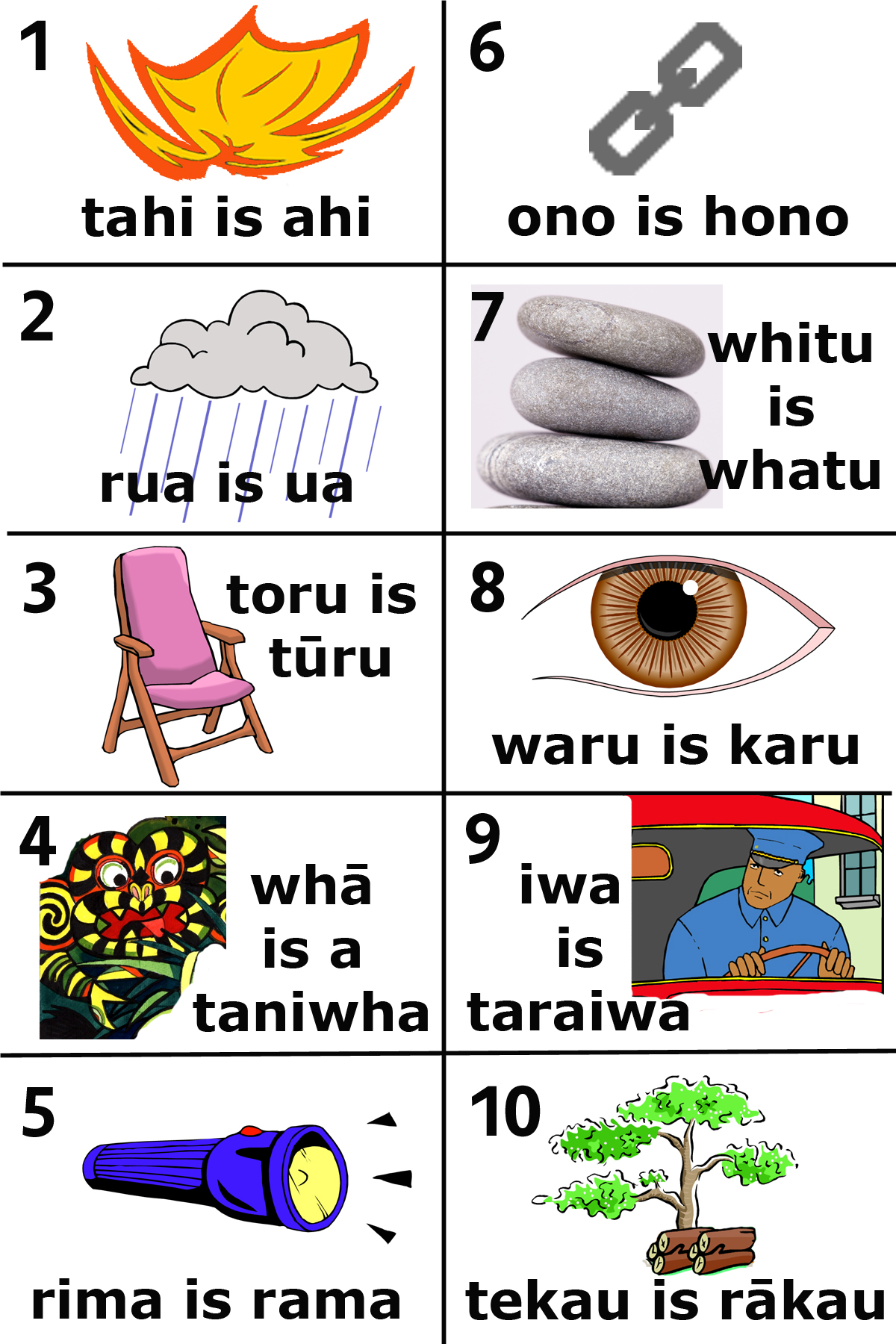
To celebrate Māori Language Week here in Aotearoa (New Zealand), I've put together a pegword set in te reo:
- tahi — ahi
- rua — ua
- toru — tūru
- whā — taniwha
- rima — rama
- ono — hono
- whitu — whatu
- waru — karu
- iwa — taraiwa
- tekau — rākau
Two large-scale international studies have become established to compare countries' performance in the core subjects of literacy, mathematics and science.
TIMSS: Trends in International Mathematics and Science Study
TIMSS is an international study involving 50 countries that assesses math and science achievement at four year intervals. It has been running since 1995. Students are assessed in the 4th and 8th years of school, and in their final year. The next assessment round will be in 2007.
Are you right-brained or left-brained?
One of the dumber questions around.
I think it’s safe to say that if you only had one hemisphere of your brain, you wouldn’t be functioning.
Of course, that’s not the point. But the real point is little more sensible. The whole idea of right brain vs left brain did come out of scientific research, but as is so often the case, the myth that developed is light years away from the considerably duller scientific truths that spawned it.