Song is a wonderful way to remember information, although some songs are better than others. Songs that help you remember need to have simple tunes, with a lot of repetition -- although a more complex tune can be used if it is very familiar. Most importantly, the words should be closely tied to the tune, so that it provides information about the text, such as line and syllable length. You can read more about this in my article on Music as a mnemonic aid, but here I simply want to mention a few specific songs designed for teaching facts.
Articles
Flashcards are cards with a word (or phrase) on one side and its translation on the other. You can buy ready-made flashcards, and these can certainly be helpful, particularly if you're inexperienced at learning another language. However, it is more effective if you make them yourself. Not only will the cards be customized to your own use, but the activity of selecting words and writing them down help you learn them.
Recently a “Framework for Success in Postsecondary Writing” came out in the U.S. This framework talked about the importance of inculcating certain “habits of mind” in students. One of these eight habits was metacognition, which they defined as the ability to reflect on one’s own thinking as well as on the individual and cultural processes used to structure knowledge.
Autobiographical memory contains the information you have about yourself. It includes several domains:
To use a strategy effectively, you need to understand why it works, how it works, when it works and when it doesn’t.
For example, all students take notes — not everyone knows how to do it well. Research into the effectiveness of note-taking has found — surprise, surprise — that sometimes note-taking helps you remember information, and sometimes it doesn’t1.
If you have a numbered list to memorize, the best mnemonic strategy is the pegword mnemonic. This mnemonic uses numbers which have been transformed into visual images. Here's the standard 1-10 set.
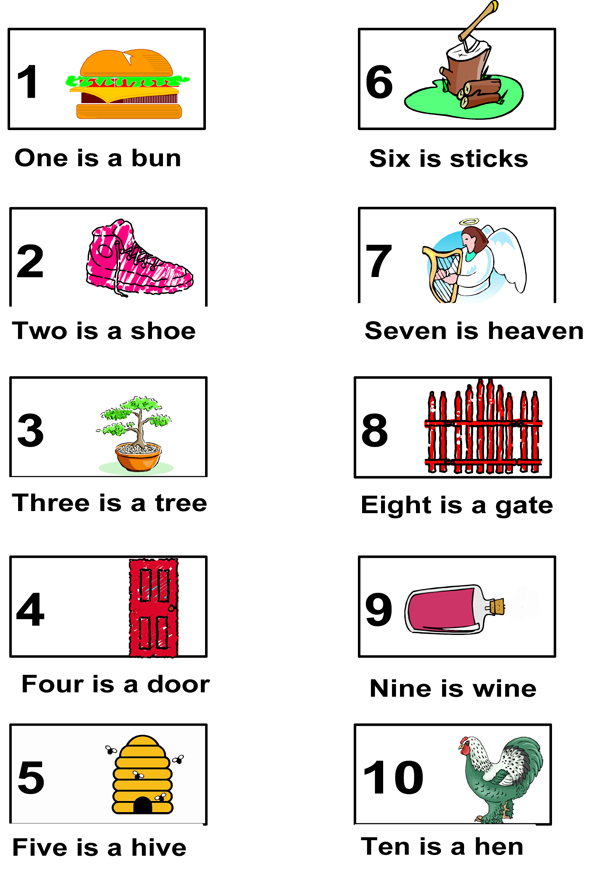
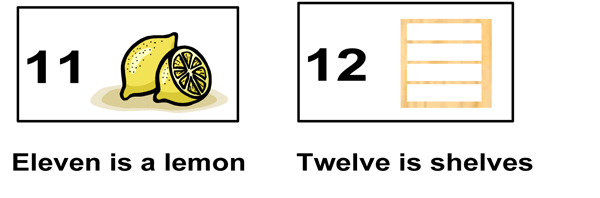
I add two more:
Distributed practice more effective than massed practice
It has long been known that spacing practice (reviewing learning or practicing a skill at spaced intervals) is far more effective than massed practice (in one heavy session). An interesting example of this comes from a study that aimed to find the best way of teaching postmen to type (this was at the request of the British Post Office). The researchers put postmen on one of four schedules:
In my article on using cognates to help you learn vocabulary in another language, I gave the example of trying to learn the German word for important, ‘wichtig’, and how there’s no hook there to help you remember it (which is why so many of us fall back on rote repetition to try to hammer vocabulary into our heads).
Here’s an interesting study that’s just been reported: 72 seven- and eight-month-old infants watched video animations of familiar fun items being revealed from behind a set of colorful boxes (see the 3-minute YouTube video).
Learning a new language is made considerably more difficult if that language is written in an unfamiliar script. For some, indeed, that proves too massive a hurdle, and they give up the attempt.